China's Luxury Market: Why Chinese Gen Z Has Stopped Buying European Brands

For decades, the Chinese market was the silent engine of European luxury. Louis Vuitton, Gucci, Chanel, Burberry: the growth of France's and Italy's major groups rested largely on a simple promise, almost colonial in its structure.
Chinese consumers wanted what came from the West because the West represented status, modernity, an idea of the world worth aspiring to. That promise is crumbling. And not because of a passing economic crisis.
The Collapse of China's Luxury Market: The Numbers
The data speaks clearly, even if the press releases from major groups do everything to make it look temporary.
According to Bain & Company, mainland China's luxury market declined by 18-20% in 2024, reverting to 2020 levels. That is not a slowdown: it is the erasure of four years of growth in twelve months.
Stock markets responded accordingly: Kering lost 39.4% of its share value in 2024 alone, Burberry 30%, LVMH 13%. Gucci, Kering's most China-exposed brand, recorded a 24% sales decline in China in Q1 2024. By Q1 2025, the group posted a further -14% in total revenues, with Asia-Pacific falling 25% year-on-year.
LVMH, traditionally immune to sector downturns, recorded a 3% organic decline in Q1 2025, with Fashion & Leather Goods contracting 5%. Worst result since 2008.
These are not signals of a market slowing down.
They are signals of a market changing shape.
Li-Ning Li-Ning Li-Ning
It Is Not Just the Recession: The Role of Chinese Gen Z
The most comfortable reading is the economic one: post-Covid China slowed down, the property market is in crisis, consumer confidence is low. All true. But reducing the problem to a cyclical issue means missing what is actually happening.
The shift is cultural before it is economic. And it has a name: Guochao (国潮), literally "national wave."
Guochao is a consumer movement that began taking shape around 2018, when sportswear brand Li-Ning presented a collection at New York Fashion Week that fused contemporary aesthetics with traditional Chinese iconography.
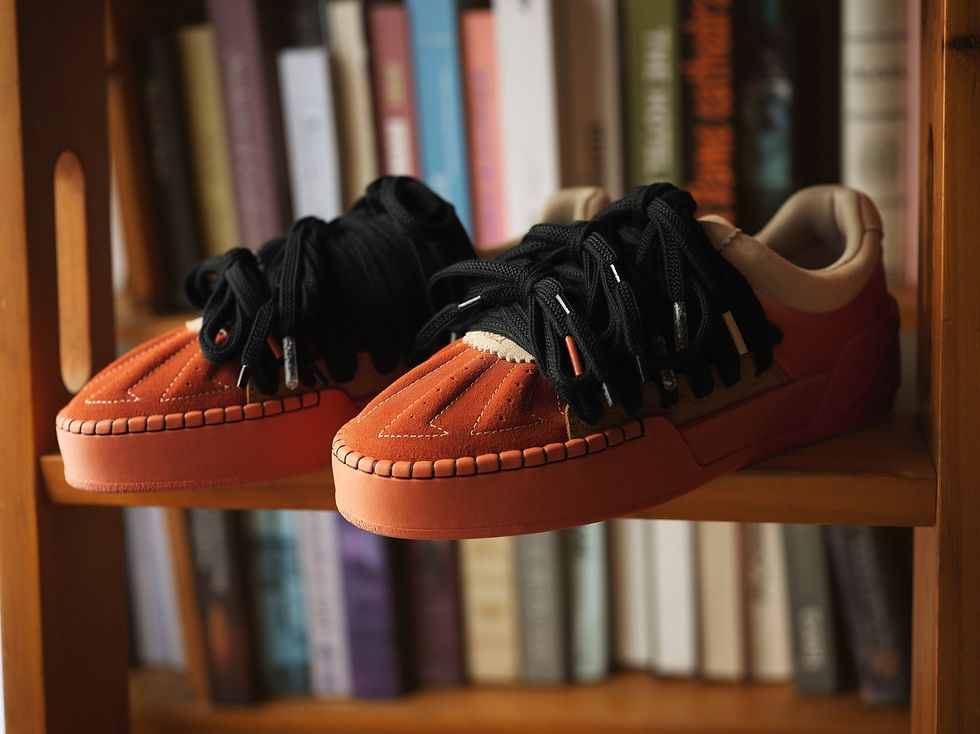
The response was overwhelming. Not just in sales: in the narrative the collection was building. For the first time, Chinese consumers had a product that was not imitating the West, but challenging it on its own ground.
Since then, the phenomenon has expanded well beyond fashion. Cosmetics, technology, automotive, food: local brands stopped positioning themselves as affordable alternatives to foreign products and started building their own identities, often more sophisticated and culturally resonant for their target audience.
Proya Proya Proya
According to Baidu, in early 2021 Chinese brands represented 75% of the most searched brands on the platform, compared to just 45% five years earlier.
China's Gen Z grew up in a China that is a global superpower. They do not carry the cultural inferiority complex of previous generations. They do not need a European logo to feel they have made it.
The Xinjiang Moment: When the Boycott of Western Brands Became Identity
There is a specific episode where the shift stopped being underground and became a visible rupture.
In March 2021, the Communist Youth League of China published a social media post drawing attention to a statement H&M had made the previous year: the Swedish brand announced it would no longer purchase cotton from Xinjiang, the region at the centre of international accusations regarding the treatment of the Uyghur minority. The response was immediate and coordinated. H&M was removed from major Chinese e-commerce platforms. Actors and influencers publicly cancelled their partnerships with the brand. State broadcaster CCTV called on consumers: "Companies that want to profit from China cannot at the same time attack China."
The boycott quickly spread to other brands that had made similar statements: Nike, Adidas, Burberry, Zara, Uniqlo, Hugo Boss. H&M's sales in China dropped by 28% within months. But the deepest effect was not financial: it was symbolic. Thousands of users on Chinese social media declared they would switch to Li-Ning and Anta, the local competitors. Not as a budget choice.
As a choice of belonging.
That dynamic changed something fundamental in how Chinese consumers relate to Western brands. The logo is no longer neutral. It has become a statement.
The Exception That Proves the Rule: Adidas's Strategy in China
There is one Western brand that posted +10% sales growth in China in 2024 while everyone else was falling. That brand is Adidas. And the reason is the exact opposite of what European luxury brands have been doing.
In 2022, in the middle of the post-Xinjiang boycott fallout, Adidas had lost 36% of its China sales. The response was not an image-recovery campaign. It was a structural rethink: an "In China, For China" strategy, with a Shanghai-based design team creating specifically for the Chinese market, not exporting a global product into it.
The most visible result is the Tang jacket: a reinterpretation of the traditional Chinese garment featuring "pan kou" knotted buttons from local tailoring, designed entirely by the Creation Center Shanghai. Presented at Shanghai Fashion Week in October 2025, it went viral globally, with nearly ten thousand units sold in the first two weeks on Tmall alone. Not because it was exotic. Because it was culturally honest.

The point is not that Adidas won by mimicking Chinese aesthetics. It is that it stopped being a German brand selling in China and became a brand designing in China. The difference is subtle in press releases. In sales figures, it is enormous.
European luxury brands are still waiting for the market to go back to what it was. Adidas has already understood that market is not coming back.
What Happens Now in China's Luxury Market
Bain forecasts China's luxury market to remain essentially flat in 2025. Not a final collapse, but no recovery either. A rebalancing. China's wealthiest consumers continue to buy luxury, but often abroad, where prices are lower and the experience is different. Chinese luxury spending outside China has already surpassed pre-pandemic levels.
European brands are in a difficult position: the product has not changed, but the context has. European luxury is still desirable, but it is no longer sufficient as a status symbol on its own.

In a country where national identity has become one of the languages of consumption, selling bags with a Parisian logo requires something more than a well-crafted campaign.
The question European brands are not yet asking is the right one: not "how do we recover the Chinese market," but "what have we actually understood about Chinese culture in twenty years of presence?" For many of them, the honest answer is uncomfortable.
Did you already know? Now you have the data. Write it in the comments, or share this article with anyone working in the industry.
CZMOS Magazine analyses contemporary Asian culture through an Italian lens. We do not cover trends: we cover what happens in between.



Comments