The Color of Silence: Kohei Yamada and the Painting Between Impressionism and Japanese Sensibility

There is a way of looking at light that belongs neither to East nor West. It belongs to those who have understood that painting is not about copying what you see, but giving back what you still feel afterward.
Kohei Yamada understands this. And he is proving it in Tokyo.
In today’s art scene, Japanese painter Kohei Yamada is doing something truly special: he uses color to bridge two worlds that seem far apart. On one side stands European Impressionism, that celebrated tradition of light-filled canvases and visible brushstrokes born in late nineteenth-century France; on the other, the sensibility of modern Japan.
This exceptional fusion can be admired in his latest works presented by FUMA Contemporary Tokyo.
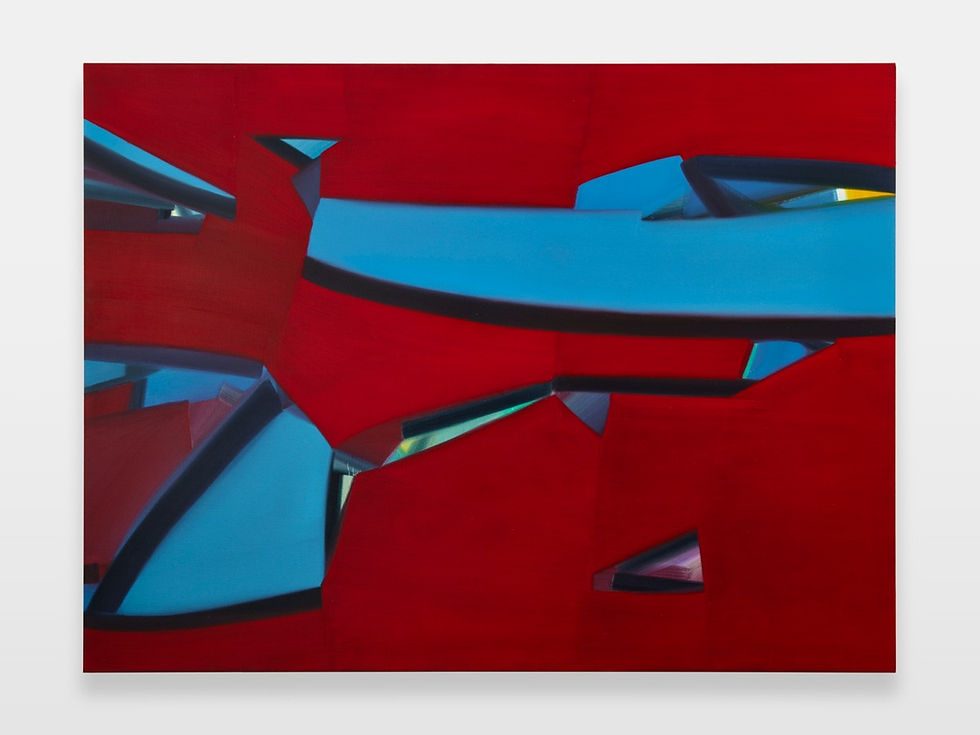
Light as Emotion: Kohei Yamada’s Painting Method
What makes his painting so compelling for anyone who sees it?
The secret lies in how Yamada treats light. The old Impressionist masters painted outdoors to capture a precise moment of the day, like a reflection on water or a sunset. Yamada goes one step further: he does not copy nature, but paints the emotion that light leaves inside us.
On his canvases, colors do not serve to draw precise objects but create an atmosphere. Looking at his works, you have the impression of watching something in constant motion, like a ray of sunlight filtering through leaves or mist slowly clearing.
Tradition and Modernity: the Dialogue Between East and West
FUMA Contemporary Tokyo has perfectly captured the essence of this artist, capable of taking an ancient technique and making it feel completely fresh. His works breathe modernity, yet convey a deep respect for tradition.

Even when working with contemporary colors, the way he layers them with lightness and transparency recalls the delicacy of classic ink and watercolor painting typical of Asia.
There is no confusion in his work: every shade is exactly where it belongs, and the colors speak to one another with extraordinary harmony.
Art Without Borders: a Universal Language
Ultimately, Yamada shows us that art needs no translators or complicated explanations to move us. His encounter with Impressionism is not a simple imitation but a bridge connecting different eras and cultures, reminding us of a fundamental truth: wonder in the face of light and nature is a universal feeling. His canvases break down every barrier, speaking a language we can all understand. Standing before one of his paintings, you need no expertise or knowledge of art history. You only need to do something as simple as it is rare in our hectic world: stop for a minute, breathe, and let the pure magic of color take over.

Impressionism was born as an act of rebellion against painting that wanted to be photography. Yamada takes it one step further: not the moment, but its weight. Not the sunset, but what it leaves on you.
That is what makes his work interesting to us, from here, from an Italy looking at Asia for categories it has not yet found.
FAQ
Who is Kohei Yamada?
Kohei Yamada is a contemporary Japanese painter known for his research into light and chromatic emotion. His works merge European Impressionist technique with Japanese aesthetic sensibility, creating an original pictorial language that belongs fully to neither tradition.
What makes Kohei Yamada's style unique compared to classical Impressionism?
The Impressionist masters painted to capture a precise moment of visible reality. Yamada goes further: he does not represent light as an optical phenomenon, but as an emotional residue. What you see on his canvases is not a landscape or a scene. It is the feeling that scene leaves inside you.
Where can you see Kohei Yamada's works?
His most recent works are presented by FUMA Contemporary Tokyo, one of the most attentive spaces for new Japanese research painting. To go deeper into his work, read the full article at czmosmag.com.



Comments