Bangkok is not a trend. It's an aesthetic in the making.

The conversation about Asian fashion in Italy almost always stops at the same places: Seoul for K-pop, Tokyo for streetwear, Shanghai for emerging luxury. Bangkok stays out of frame, treated at best as a tourist destination, never as a creative center with a voice of its own.
That's a perspective error. The Thai independent scene has developed over recent years a recognizable aesthetic that resists reduction to outside influences: local craftsmanship, club culture, sartorial technology, recycled materials, memory of traditional costume. It's not K-pop fashion filtered southward. It's not reworked Japanese streetwear. It's something in the process of becoming itself.
These are five names worth knowing, not because they're about to "arrive" in Europe, but because what they do already says something precise about where fashion in Asia is heading.
1. Painkiller Atelier
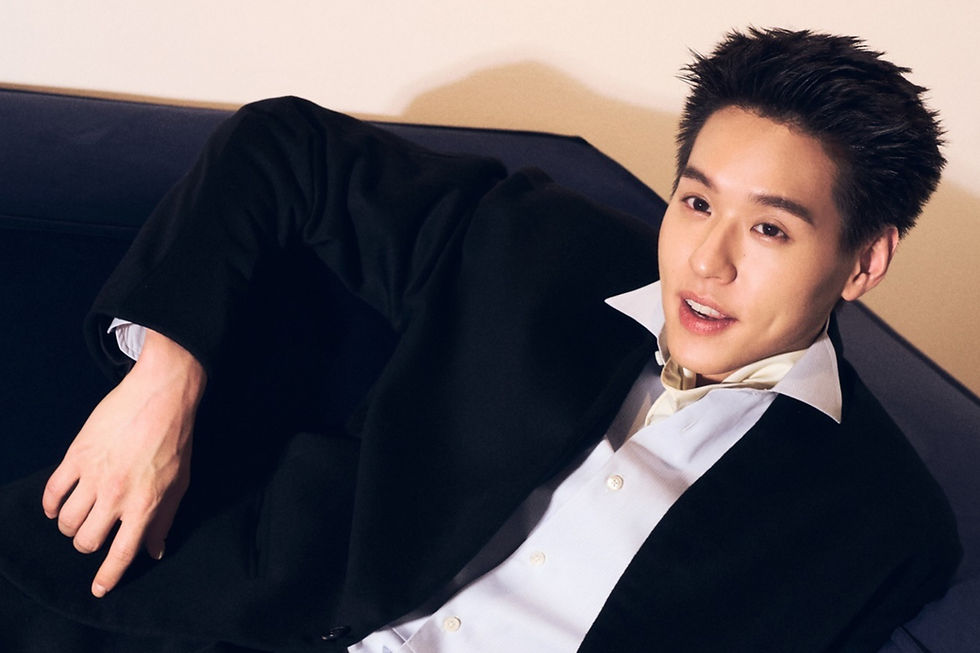
The name is already a manifesto. Painkiller is a menswear label founded in Bangkok with a philosophy that defines itself as "romantic finery for artsy gentlemen," a formula that would sound like marketing in other contexts. Here it reads as a literal description. The pieces are built on an idea of masculinity that has no need to be confirmed by hardness: soft fabrics, elaborate silhouettes, sartorial details that reference both colonial wardrobes and the aesthetic of Bangkok's underground club scene.
Painkiller has shown at Bangkok International Fashion Week with collections inspired by the tribes of northern Thailand, reinterpreting traditional materials and motifs without turning them into folklore. The result is a menswear that speaks about Thai identity in a non-nostalgic way, which is exactly the hardest thing to do.
Painkiller Atelier Painkiller Atelier Painkiller Atelier
2. Panya
Panya works in contemporary jewelry with an approach that Italian audiences would immediately recognize as close to artisanal goldsmithing: pieces produced in small series, attention to process, refusal of serialization. What distinguishes Panya is the way the reference to Thai culture never becomes decoration. It's a visual grammar, not a citation.
In a market, the Thai jewelry market, dominated by mass production for international luxury, Panya represents the opposite choice: small scale, strong identity, selective distribution. For an Italian audience accustomed to reading jewelry as a cultural object before a commercial one, it's a name that makes sense to know.
Panya Panya Panya
3. Vinn Patararin
Vinn Patararin is probably the most internationally visible name on this list. The duo has already shown at New York Fashion Week with the show "One Night in Bangkok," their pieces have been worn by Timothée Chalamet and Charli XCX, and the industry press follows them. But the reason they belong on this list isn't visibility. It's method.
Vinn Chokkhatiwat and Patararin Pongprasit both trained outside Thailand: he with a master's in Design and Contemporary Technology in Paris at ENSCI-Les Ateliers, she at Studio Berçot and with experience at Azzedine Alaïa.
Their studio is multidisciplinary in the most literal sense: fashion, architecture, installation, and ongoing research with Bangkok's Ramathibodi Hospital on the use of laser-cut fabrics in stroke patient rehabilitation. The flare motif, their visual signature inspired by the reflection of light on water, isn't an aesthetic. It's the starting point of a system of thought.
Vinn Patararin Vinn Patararin Vinn Patararin
4. Nong Rak
Founded in 2018 by the duo Cherry W. Rain-Phuangfueang and Teerapat "Home" Phuangfueang, Nong Rak began as an experimental label and developed into a creative studio known for artisanal crochet and knitting techniques, gradient color palettes, and the use of deadstock materials: waste yarns, locally dyed silk, rare and limited raw materials.
In 2026 the brand entered the top 20 of the LVMH Prize for young emerging designers: the most important recognition in the global sector.
Their new studio on Decho Road in Bangkok's Silom district is a hybrid space between retail and creative workshop, a model that says a lot about how independent Thai designers think about their relationship with their audience: not a boutique, not an atelier in the classical sense, but an open process space.
Nong Rak Nong Rak Nong Rak
5. Pipatchara
Pipatchara is the most radical name on this list in terms of approach to material. The label founded by sisters Phet-Pipatchara and Jittrinee Kaeojinda transforms orphaned plastics, bottle caps, containers, fishing nets, into geometric fabrics used for garments, bags, and accessories.
Every piece is handmade in collaboration with artisan communities in northern Thailand.
This isn't sustainability as marketing. It's a project that binds technical innovation, local economy, and visual identity in a way where none of the three elements exists without the others. For Italian fashion, which has a long and complex relationship with the idea of craftsmanship, it's a model that deserves critical attention, not just admiration.
Pipatchara Pipatchara Pipatchara
Five brands, five different approaches to the same question: what does it mean to make fashion in Bangkok in 2026, with an artisanal history behind you and a gaze that looks outward without wanting to become something else?
The answer, in all five cases, isn't compromise. It's identity as method.
CZMOS — Asian culture through an Italian gaze


Comments