Liu Yu won China's biggest idol show. The following year, the government banned everything.

Liu Yu started studying traditional Chinese dance at the age of four. Sixteen years later, in 2021, he won Produce Camp with over 25 million votes, debuting as center and captain of INTO1, a multinational group produced by Tencent Video.
It was the peak of a system built in less than a decade. It was also, without anyone knowing it yet, nearly the end of that system.
In the same year Liu Yu stepped on stage as the most-voted idol of the season, the Chinese government was preparing the measure that would shut that world down.
Liu Yu Liu Yu Liu Yu
How the system worked before the ban
In the years leading up to 2021, China's idol system had replicated the Korean model at its own scale and speed. Platforms like iQiyi and Tencent Video produced survival shows: hundreds of trainees competing, audience voting as the central mechanism, fandoms organized with industrial precision.
The most-watched programs, including Produce Camp and Youth With You, had turned fandom into commercial transaction. To vote for your candidate, you bought sponsor products, scanned QR codes, accumulated points. The music was almost incidental. What mattered was volume, traffic, engagement measurable in purchases.
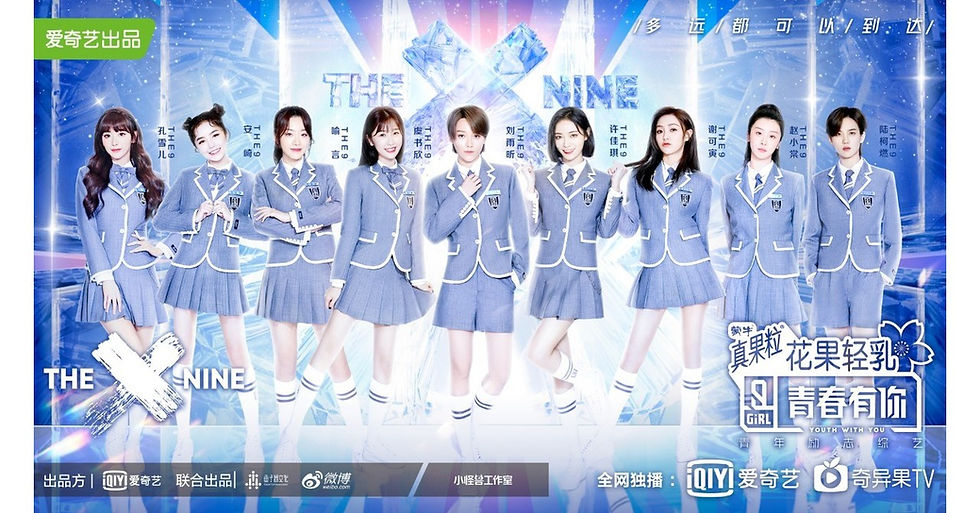
Liu Yu was an anomaly inside that system. While other trainees built their image on K-pop and global aesthetics, he brought traditional Chinese dance to the stage, Hanfu costumes, movements codified by centuries of classical culture. He had already participated in national cultural programs before Produce Camp. He had an artistic history that didn't depend on the format.
The yogurt scandal and the state's pretext
In May 2021, a few months after INTO1's debut, Youth With You 3 was suspended after fans had purchased enormous quantities of sponsored yogurt to obtain voting codes, dumping the product unopened. The images circulated everywhere: boxes of untouched yogurt in the trash. This was no longer a matter of aesthetics or excessive fandom. It was visible, documentable, photographable waste. The state had its pretext.
The pretext, however, wasn't the cause. The cause was ideological. The regulator ordered broadcasters to reject what it called "abnormal aesthetics": men considered too feminine, styles borrowed from K-pop, images incompatible with the traditional masculinity Beijing was actively working to reintroduce into public imagination. The ban on idol shows was the most visible moment in a campaign called Operation Qinglang, which roughly translates as "for a clean environment." Clean, meaning controlled.
Kris Wu had been arrested. Zheng Shuang had been fined the equivalent of 46 million dollars for tax evasion. Fandoms were fighting online, manipulating charts, organizing hate campaigns against rival artists. More than enough material for a legislative intervention. The point, however, wasn't to punish excess: it was to bring under state control an industry that had developed its own autonomous logic, with its own money, its own languages, its own loyalties.
Liu Yu: What happened to C-pop after 2021
The industry didn't disappear. It reorganized. Agencies dismantled training programs oriented toward survival shows and redirected trainees toward individual careers: dramas, endorsements, solo releases.
INTO1 held its final concert on April 23, 2023 and officially disbanded the following day, at the expiration of its contract. No successor group in China. There was no next show to come from.
Liu Yu did what few in the system could have done: he continued. His first solo concert in August 2023 surpassed one billion online views. He released EPs and albums built around the same artistic identity that had made him recognizable on Produce Camp: classical Chinese dance, guofeng aesthetics, a vision that predated the format and survived its end.
He was, paradoxically, exactly the type of artist the government claimed to want. Rooted in traditional culture, distant from K-pop aesthetics, recognizably Chinese.
Liu Yu 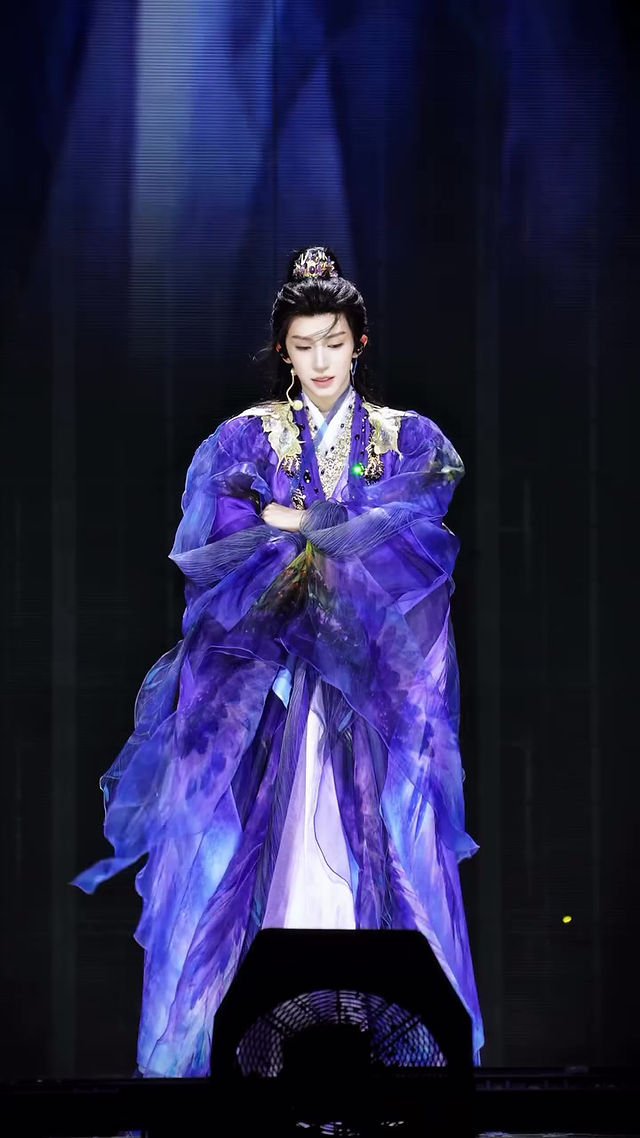
Liu Yu Liu Yu
Tencent's move
The most significant thing, though, isn't about Liu Yu. It's about Tencent. Tencent didn't stop making survival shows. It moved them outside China. In February 2024, Chuang Asia: Thailand aired, co-produced with Jackson Wang's company, filmed and broadcast in Thailand. Seventy trainees, ten nationalities, debut group named Gen1es. A second season followed in 2025, still in Thailand, with male trainees. Identical format, identical logic, identical branding. Just a different country.

China didn't kill its idol industry: it exported it to where the rules are different. The system keeps producing groups, building fandoms, generating content for Tencent's platforms. It just no longer does so on national soil.
The difference is that in China the state and the platform have explicitly aligned interests. When the government said stop, iQiyi cancelled all future idol shows in the same press release. There's no fiction of editorial autonomy.
Liu Yu survived the system that launched him because he had something the system hadn't given him. Other trainees, built entirely inside the logic of the survival show, didn't have the same foundation.
The factory didn't close. It relocated. But not all idols relocated with it.



Comments