Why Musicians Are Becoming Fashion’s Most Important Ambassadors
- CZMOS Redazione

- 4 hours ago
- 3 min read
For a long time, fashion chose its faces among models, actors and traditional celebrities.
Today something has changed. And the change has a sound.
More and more brands are choosing musicians as their main ambassadors, turning singers and producers into the real faces of contemporary fashion.
This is not an isolated case. It is a cultural shift.
In recent years artists such as A$AP Rocky, Rosalía, Bad Bunny and Jennie have redefined the relationship between music and fashion, becoming protagonists of global campaigns and constant presences at fashion shows.


The reason is simple: music has become the most powerful cultural language of the current generation.
Fashion is no longer looking for models. It is looking for identity.
When artists become global fashion ambassadors
In recent years this transformation has become even more visible.
More and more fashion houses are choosing musicians not only as campaign faces but as central figures in their creative narrative.
Among the most visible examples in recent years:
Jennie — Chanel One of the most influential ambassadors in contemporary luxury fashion.
Rosalía — Dior and Louis Vuitton Her Motomami aesthetic has shaped a strong visual identity that resonates both in music and fashion.
Bad Bunny — Jacquemus and Adidas His theatrical and gender-fluid style made him one of the most visible musicians in fashion campaigns.
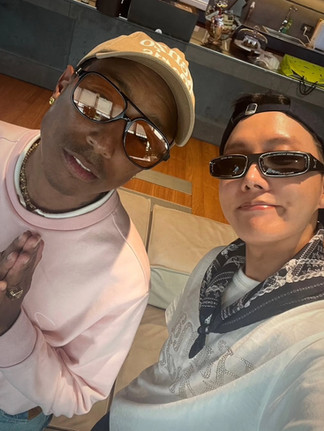
J-Hope — Louis Vuitton A clear example of how K-pop and luxury fashion have become deeply connected.
A$AP Rocky — collaborations with Puma and Ray-Ban
In recent years A$AP Rocky has expanded his role in fashion beyond that of a traditional ambassador. Alongside collaborations with major fashion houses and global brands, he has started developing capsule collections and creative projects with companies such as Puma and Ray-Ban, building a distinctive aesthetic language that blends street culture, luxury and contemporary design. Rather than simply representing fashion, Rocky now actively contributes to shaping it.
Pharrell Williams — Louis Vuitton Not just an ambassador: Pharrell became the menswear creative director of Louis Vuitton, showing how deeply music and fashion now overlap
The difference compared to the past is clear.
Today artists are not just endorsers. They actively shape the visual identity of fashion brands.




Fashion no longer looks for perfect faces
Fashion once searched for perfect faces.
Today it searches for people who represent a culture.
Musicians do not only bring an aesthetic image. They bring a narrative.
Every artist builds a visual universe: colors, styling, cultural references and aesthetic codes.
When a brand collaborates with a musician, it is not simply choosing a face.
It is entering an entire cultural scene.
And that is exactly what contemporary fashion wants.
Music creates communities. Fashion observes them.
There is another important reason.
Music creates real communities.
An artist does not only have followers. They have an audience that identifies with a style, an attitude and a way of living.
When fans listen to an artist, they often adopt the same aesthetic.
Think about streetwear and rap. Think about Japanese indie scenes. Think about K-pop. Fashion did not create these identities.
It watched them grow through music — and then amplified them.



The stage has become the new runway
If in the 1990s fashion mainly lived in magazines and fashion shows, today it lives on concert stages and music videos.
Every tour becomes a global visual platform.
Stage outfits quickly become viral content, cultural references and inspiration for designers and stylists.
That is why many fashion houses no longer dress artists only for special events.
They collaborate with them continuously: capsule collections, global campaigns and creative direction.
The line between music artist and fashion icon has almost disappeared.
Fashion is no longer just aesthetic decoration. It has become part of the musical language itself. And maybe this is the key point.
Fashion did not choose musicians by accident.
It chose them because they are the people who best describe how a generation feels today. And fashion has always wanted to dress exactly that.


Comments