Tattoo as Eternal Art: Identity, Freedom and Memory on Skin
- Teresa Perri

- 24 feb
- Tempo di lettura: 2 min
Human beings have always felt a strange, ancestral necessity: not to leave their skin untouched.
Since the times when the world was explained only through myths, tattooing was not decoration but a kind of spiritual identity card. It was the body declaring its belonging to the earth and its laws.
In many ancient cultures, marking the skin meant protecting it, elevating it to a temple, transforming the pain of a moment into the strength of a lifetime. It was not about appearing, but about being.
Tattoo Between Rite of Passage and Memory
Across the centuries, this practice went through phases of silence and shadow, often surviving in hidden corners of history.
It became a silent devotion for pilgrims seeking an indelible bond with the sacred, or a rite of passage for those who felt the need to mark a clear boundary between “before” and “after” on their own flesh.
It is an art form that never needed museums to survive, because it has always traveled with people - in their daily lives, in their dreams, and in their struggles.
Contemporary Tattoo: Elegance and Pure Narrative
Today, tattooing has finally laid down the weapons of provocation to wear those of elegance and pure storytelling. It is no longer the sign of someone wanting to stand outside society, but the language of someone wanting to understand themselves more deeply.
Contemporary artists work with a sensitivity that would once have been unthinkable: lines as thin as hair, shades that resemble mist, compositions that respect anatomy as if they were born together with muscle and bone.
Skin has become the canvas of an art form that is, by definition, the most intimate imaginable.


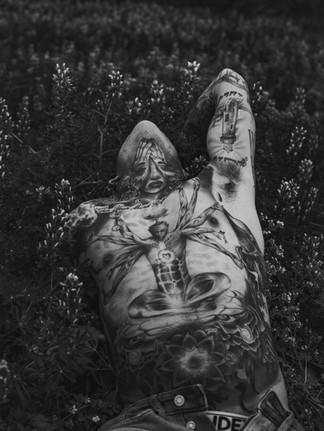


The Freedom to Choose: Tattoo as eternal art
The real revolution of our time lies in freedom. We have the freedom to choose a symbol that deeply belongs to us, to transform a memory or an emotion into a graphic trace that will stay with us forever. In a world racing toward the digital and the ephemeral, where everything can be deleted with a button, tattooing remains one of the few definitive gestures.
It is an act of trust in the future: deciding today what we want to see on ourselves tomorrow.
Ultimately, getting tattooed today is a gentle way to reclaim oneself. It is the choice to inhabit one’s body not as a random shell, but as a curated, narrated, and loved space. It is art that stops being an object observed from afar and becomes part of our breath, our growth, and finally, our truest story.
CZMOS: Culture Under Pressure
In an era that deletes everything, archives everything, updates everything, the body remains the only space that does not accept “undo.” Tattoo as eternal art is not a trend. It is a position.
It is the choice to make permanent what feels fragile.It is a gesture against the ephemeral, against the algorithm, against the idea that everything must be reversible.
Tattoo as eternal art is memory engraved, identity declared, vulnerability made visible. Not to provoke. Not to decorate. But to remain.
Because if everything can be edited, filtered, erased, skin cannot.
And maybe this is where tattoo as eternal art becomes truly radical:not in the ink, but in the decision.